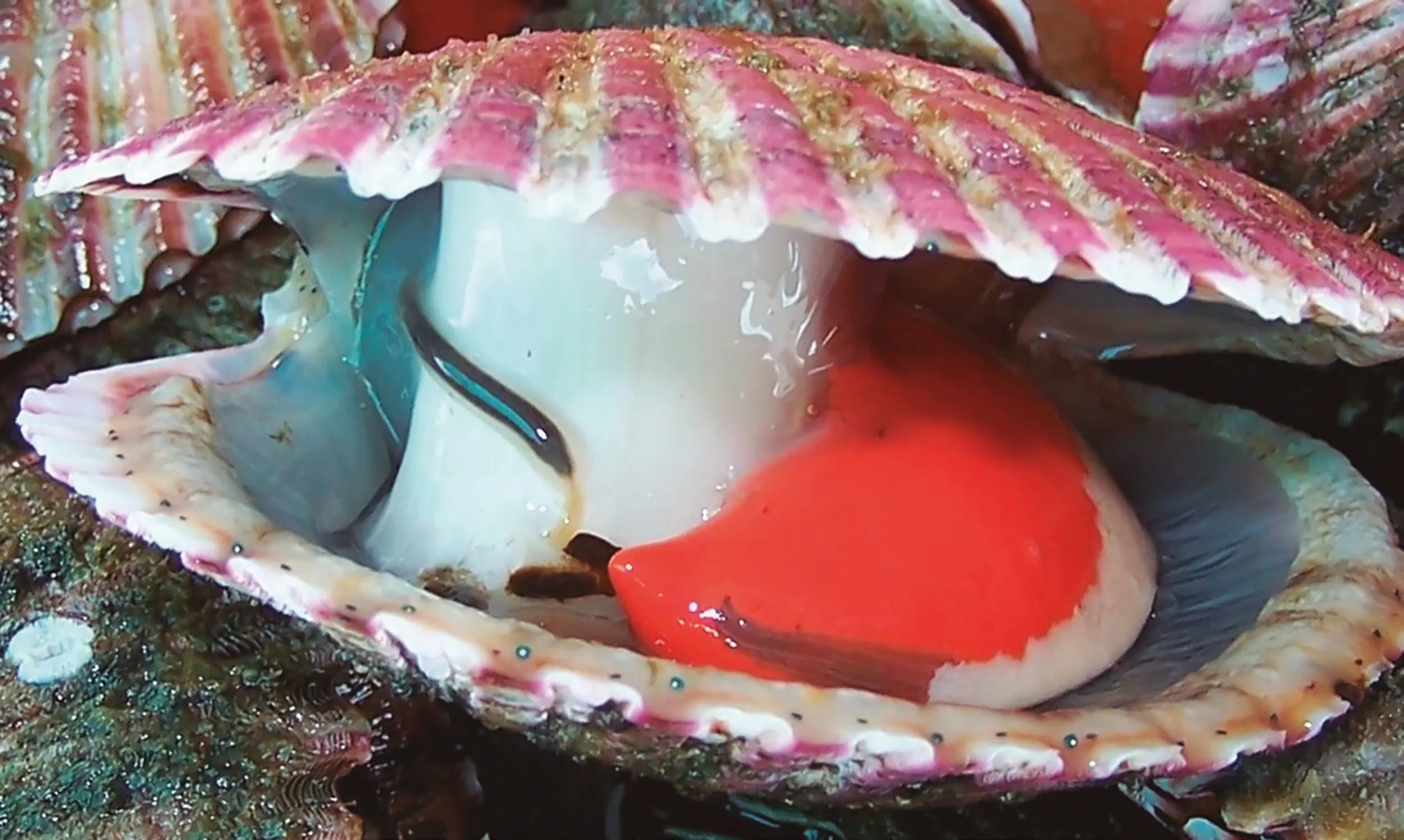

Founded in 1989, the Peruvian company Acuapesca has over three decades of experience promoting the development of technologically advanced and sustainable aquaculture in the comprehensive cultivation and processing of scallops. One of its main strengths lies in its sustainable leadership with a forward-looking vision, based on a multidisciplinary team committed to continuous innovation in all its processes. This allows it to compete in major international markets with an ASC-certified traceable and organic product.
In its beginnings, a little over 35 years ago, it was considered a small "business venture" within the nascent aquaculture industry of that era. It was an unknown and high-risk initiative, which consisted of investing in scallop farming in the sea, several meters deep, in a completely remote and isolated location north of Lima. After a long search for the ideal site, the company's CEO, Carlos Goldin, chose Guaynuma, in Casma, just under five hours north of Lima.
Over the years, Acuapesca has established itself in the international market by prioritizing quality and traceability as its core principles for its scallops, throughout all stages of cultivation and final processing. In fact, it was the first company in the world to certify its scallop production as organic (EU Organic), as well as the first bivalve farm to obtain Aquaculture Stewardship Council (ASC) certification. Both certifications demonstrate its strong commitment to the sustainability of the resource, environmental protection, and the social well-being of its employees.
Currently, the Acuapesca group has entered a process of "corporatization," integrating its main areas while remaining true to its core values and reaffirming its commitment to excellence through an executive team dedicated to a clear vision. This allows it to assume leadership in the technologically advanced and innovative aquaculture industry, demonstrating that business success can go hand in hand with environmental stewardship and the well-being of its employees. Ultimately, this marks a milestone in Acuapesca's history and the beginning of a new era of progress and business sustainability.
With an annual production of more than 2,000 tons of exported product, the Acuapesca group not only maintains the highest standards of quality and sustainability in all its activities, but also provides formal and inclusive employment to more than 1,000 people across its six companies.
The group benefits greatly from the vertical integration provided by its own seed production center (hatchery), strategically located opposite the offshore cultivation areas. It also emphasizes that the farming is sustainable, employing state-of-the-art technology. Its dedicated scallop processing and freezing plant is situated very close (30 minutes) to the cultivation areas, facilitating the daily transport of the harvests, ensuring they arrive live and at peak freshness for immediate processing.
The plant holds important international certifications such as BRC, IFS, ICS, HACCP, ISO 9001, Organic, SMETA, and BASC, which guarantee the quality and traceability of its products. It processes various value-added products according to international market demand, with presentations such as ROE ON, ROE OFF, Half Valve ROE ON, and Half Valve ROE OFF.
We must not forget that this is an activity that entails significant risks due to its dependence on external factors, such as the El Niño phenomenon of 2017 and the tropical cyclone Yaku, which occurred in March 2023, which increased crop mortality by over 50% during that year, due to the negative effects on the sea from the discharge of fresh water from rivers, loaded with mud, and the extreme temperature changes that occurred.
Despite this, with the immediate activation of their hatcheries, the recovery of crops through the supply of "own seed" generated a rapid restoration of their populations, with a consequent increase of 30% in their sales the following year.
Their recent investments have enabled automated packaging, weighing, and sealing systems to meet customer demand in the United States and the European Union. They are also targeting the gourmet sector of hotels, restaurants, and cafes (HORECA) in Asian markets such as Hong Kong, Singapore, Taiwan, and Vietnam.
Their sustainable farming system, along with the production of organic shellfish, allows them to market a "unique" product, whose flavor and texture make it possible to strengthen its differentiation and opt for a prominent position in niches where organic products are highly appreciated.